June 8, 2026
Superintendent's Weekly Update - June 8, 2026
Superintendent's Weekly Update #WeAreHolmdel #LiveHolmdelBlue #HolmdelProud June 8, 2026 Dear Holmdel Township School Community, I hope this finds you well. The final stretch of the 2025–2026 schoo...
June 1, 2026
Superintendent's Weekly Update - June 1, 2026
Superintendent's Weekly Update#WeAreHolmdel #LiveHolmdelBlue #HolmdelProud June 1, 2026Dear Holmdel Township School Community,I hope this finds you well.And so the calendar has turned to June, plac...
May 28, 2026
TIME SENSITIVE: FAMILY ENGAGEMENT SURVEY
May 28, 2026Dear Holmdel Township School Community,Thank you for your continued engagement in our Family Engagement Strategic Plan survey process. Based on community outreach and requests for addit...
May 26, 2026
Superintendent's Weekly Update - May 26, 2026
Superintendent's Weekly Update #WeAreHolmdel #LiveHolmdelBlue #HolmdelProud May 26, 2026 Dear Holmdel Township School Community, I hope this finds you well and that you enjoyed a restful Memorial D...
May 11, 2026
Superintendent's Weekly Update - May 11, 2026
Superintendent's Weekly Update#WeAreHolmdel #LiveHolmdelBlue #HolmdelProud May 11, 2026Dear Holmdel Township School Community,I hope this finds you well. I trust all the mothers enjoyed a joyous an...
May 6, 2026
Board of Education Recognizes Winter Student-Athletes
At the April 29 meeting, the Holmdel Board of Education proudly recognized student-athletes from our winter sports programs, celebrating their outstanding achievements across swimming, track & ...
May 6, 2026
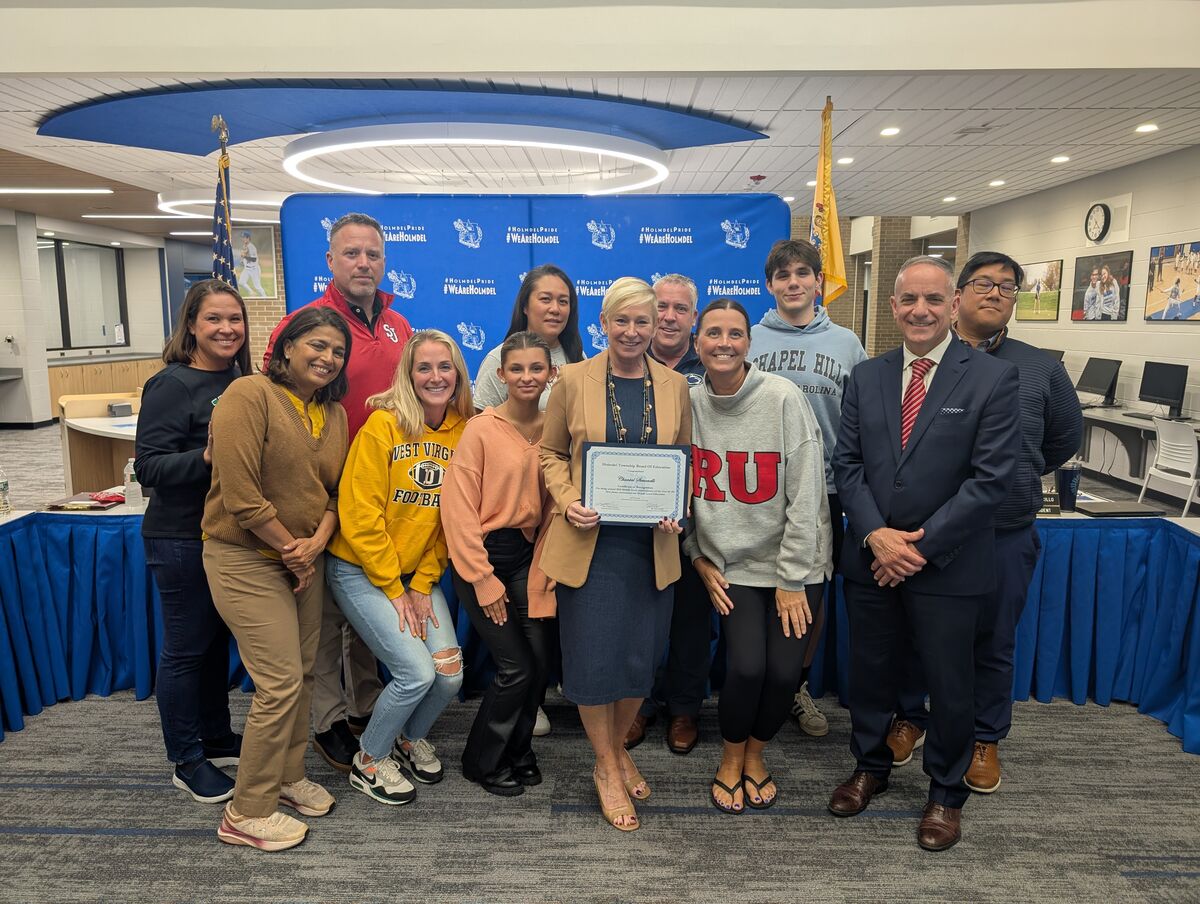
Mrs. Simonelli named 2026 MS Administrator of the Year
At its April 29 public meeting, the Holmdel Board of Education proudly recognized William R. Satz principal Mrs. Chantal Simonelli for being named 2026 Middle Level Administrator of the Year by the...
May 4, 2026
Superintendent's Weekly Update - May 4, 2026
Superintendent's Weekly Update #WeAreHolmdel #LiveHolmdelBlue #HolmdelProud May 4, 2026 Dear Holmdel Township School Community, I hope this email finds you well. As we begin Teacher Appreciation We...